The Chai Ritual
Chai in India is rarely about the tea. It is about the stopping — the small, twice-daily permission to sit down and be with each other.
The short version
- Masala chai is boiled (not steeped) with milk, sugar and spices like ginger and cardamom.
- More than a drink, chai is India's ritual of pausing and gathering, twice a day.
- Every household — and every chaiwala — has a signature blend and method.
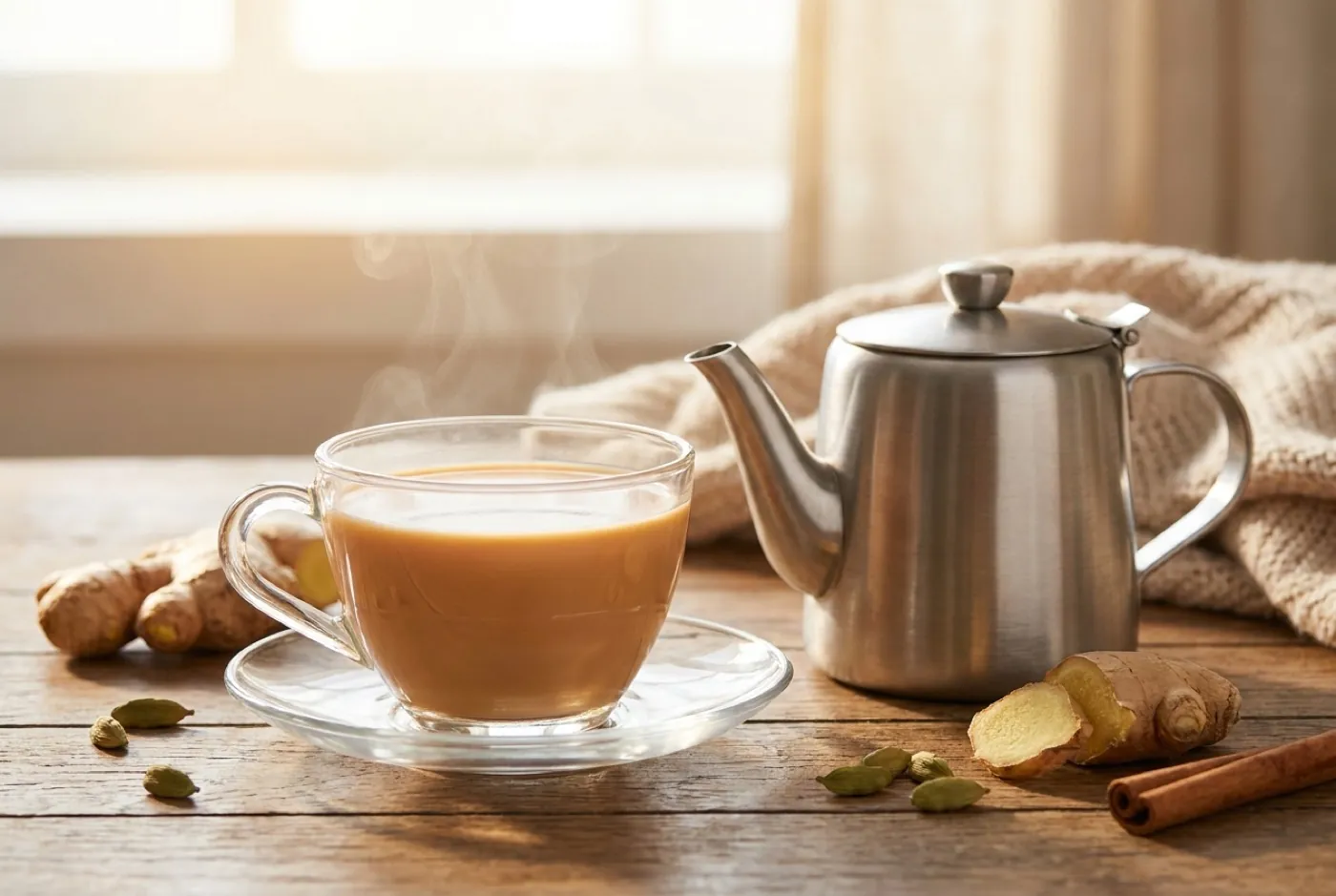
Chai in India is rarely about the tea. It is about the stopping. Twice a day, sometimes more, the kettle goes on and the world is asked to wait a moment. Water, milk, loose tea leaves, sugar, and whatever the house believes in — ginger crushed with the back of a spoon, a green cardamom, a slip of cinnamon, a few leaves of lemongrass from a pot on the balcony. It is boiled, not brewed; watched, not timed; poured hot into small glasses so it cools fast enough to drink and slow enough to sit with.
Boiled, not steeped
This is the detail outsiders miss: real masala chai is cooked. The water and spices come to a boil, the tea leaves go in and darken, the sugar dissolves, the milk joins and the whole thing is brought up to a rolling boil once, twice, sometimes three times, each rise deepening the colour and the flavour. It is closer to making a small pot of soup than dunking a teabag. The result is strong, sweet, spiced and milky — a drink with body and warmth.
You never really offer someone tea. You offer them fifteen minutes of your life.
The economy of conversation
The chaiwala on the corner knows this better than any café. His clay kulhad holds barely three sips, but around his stall an entire economy of conversation happens — deals, gossip, heartbreak, cricket, politics, the day's complaints. Chai is the excuse India invented to sit down with each other. In a country that rarely says "let's talk about our feelings," it says instead, "chai pi kar jao" — stay, have tea before you go — and means exactly the same thing.
A blend for every home
No two families make it the same. Some swear by adrak (ginger) for winter, some by elaichi (cardamom) year-round, some keep a homemade chai masala jar of ground spices. The proportions are never written; they are felt, adjusted to the weather, the mood, the guest. To be handed a cup made exactly the way you like it is a small, precise act of love.
Common questions
How do you make authentic masala chai?
Boil water with crushed ginger and cardamom (and optional cinnamon or cloves), add loose black tea and sugar, then milk, and bring to a rolling boil once or twice so the flavours infuse. It's boiled, not steeped, and served hot.
What spices go into chai masala?
The most common are cardamom and ginger, often with cinnamon, cloves, black pepper and fennel. Proportions vary by household — cardamom-forward blends are popular in the north, ginger-heavy ones in the monsoon and winter.
Is chai good or bad for you?
In moderation, spiced chai can be comforting and the spices (ginger, cardamom) aid digestion. Watch the sugar and caffeine if you're sensitive; many people enjoy it with less sugar or with a lighter hand on the tea.