The Masala Dabba: Seven Tins, One Soul
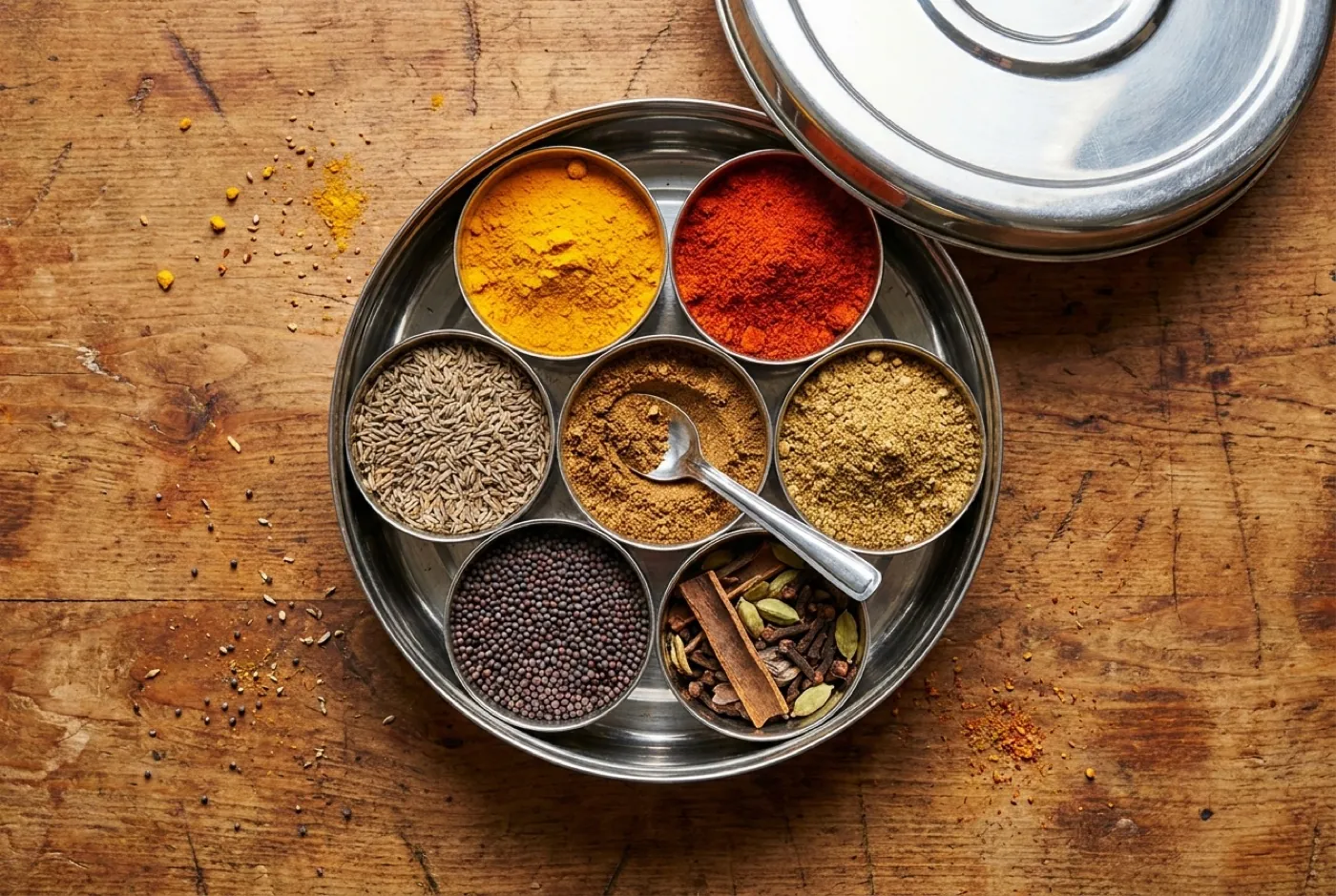
Open any kitchen in India and you'll find it: a round steel box, and inside, seven little tins nestled like planets. It is the kitchen's memory.
The short version
- The masala dabba is the round steel spice box at the centre of every Indian kitchen.
- Its seven tins usually hold turmeric, chilli, cumin, coriander, mustard seeds and personal favourites.
- Indian cooking is measured by feel and memory, not spoons — the dabba makes that possible.
Open any kitchen in India and you will find it: a round steel box with a tight lid, and inside, seven little tins nestled like planets. The masala dabba is not a spice rack — it is the kitchen's memory, its shortcut, its signature. No two are identical. What sits in those seven tins tells you where a family is from, what they love, and how their food will taste before a single flame is lit.
The seven planets
The usual suspects: turmeric, the yellow that colours everything and heals a sore throat in warm milk; red chilli, for heat and courage; cumin, whose seeds crackle in hot oil to begin a thousand dishes; coriander, ground and earthy; mustard seeds that pop and dance for a southern tadka. Then the personal ones — garam masala a grandmother still blends by feel, a pinch of hing (asafoetida) whose sharp smell mellows into something no dal can do without, or turmeric's cousin spices particular to a region.
You don't inherit a family's recipes. You inherit their masala dabba, and learn the rest by watching.
Cooking by feel
To cook Indian food is to reach into that box without looking, to know a teaspoon by the weight of the spoon and the smell rising off the pan. It is not measured; it is felt. A cook adds haldi until the colour is right, chilli until the memory of the family's tolerance is satisfied, garam masala at the end so its aroma survives the heat. The dabba makes this possible — everything essential in one place, within arm's reach of the flame.
The soul of the kitchen
Tempering — the tadka — is where the dabba comes alive: cumin or mustard seeds thrown into hot oil or ghee, sputtering, releasing their oils, perfuming the whole dish in seconds. That first crackle is the sound of an Indian kitchen waking up. More than any single recipe, the masala dabba — and the instinct to season by hand and by heart — is the real secret of how India cooks.
Common questions
What is kept in a masala dabba?
Typically seven everyday spices: turmeric, red chilli powder, cumin seeds, coriander powder, mustard seeds, and two personal choices such as garam masala, fennel, or asafoetida (hing). It keeps a cook's most-used spices together and within reach.
What are the most essential Indian spices for beginners?
Start with turmeric, cumin (seeds and powder), coriander powder, red chilli powder, mustard seeds and garam masala. With these six you can cook a huge range of Indian dishes.
What is a tadka or tempering?
A tadka is spices (like cumin or mustard seeds) fried briefly in hot oil or ghee to release their aroma, then poured over or stirred into a dish. It's a fast, dramatic way to add deep flavour, used at the start or finish of cooking.